
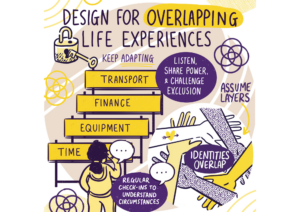
Design for overlapping life experiences involves considering intersectionality. Intersectionality in youth leadership means recognising how overlapping identities, experiences and responsibilities shape participation. Principle 10 of Leaders Like Us explores why a programme that works for many young people can still be difficult for others to access when barriers combine.
This resource helps you consider how cost, transport, caring responsibilities, faith, disability, racism, anxiety, language and safety may interact. It offers practical ways to widen recruitment, provide low-pressure participation options and create different routes into leadership. It also highlights clear, varied communication and visible support that does not require young people to explain personal circumstances repeatedly.
Use the examples, suggested actions and signs of progress to look for patterns in attendance, drop-out, progression and who is missing from decisions. The aim is not to label young people more precisely, but to make concrete changes to delivery, timings, venues and support so responsibility for inclusion is shared across the programme.
To download the resource, please click the download resource link at the bottom of the page. After viewing this module, move to the next one here:
Principle 11: Broaden opportunties by recognising different forms of leadership
If you have questions about the Leaders Like Us toolkit, would like to discuss how to use the resources in your setting, or are interested in working with us, please get in touch.
Dr Jamie Crowther
Born in Bradford
Email: jamie.crowther@bthft.nhs.uk
We welcome feedback on the toolkit, including how you have used or adapted the resources and what you have learned.